May 8, 2025
Crew

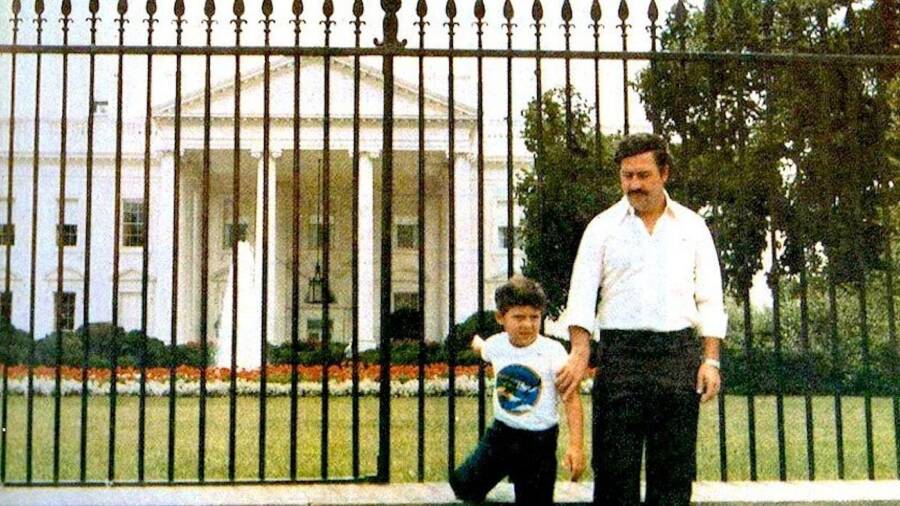
That infamous photograph of Pablo Escobar standing casually in front of the White House with his son has become one of the most iconic images in criminal history. It represents everything about Pablo’s audacity and his complex relationship with power. But what most people don’t know is the real story behind that photograph – the details that never made it into the documentaries or news reports.
Having worked directly with Pablo during the height of the Medellín Cartel’s power as his primary pilot and route architect, I can tell you firsthand that the commonly accepted version of how he entered the US for that photo isn’t entirely accurate.
While many believe Pablo used a diplomatic passport or fake documents in 1981 to take this trip, the reality was far more sophisticated. Pablo had established a network of government contacts – both in Colombia and, more secretly, within certain US agencies – that facilitated his movements. I know this because I personally designed and operated the transportation network that made these connections possible. During this exact period in 1981, I was flying regular loads into the US for Pablo, having established the most efficient and secure air corridors between Colombia and various drop points across America.
Pablo wasn’t just trying to “legitimize” himself as most historians claim. He was actually conducting business and inspecting the smuggling routes I had established for him during this family vacation. The photo op at the White House was Pablo’s way of thumbing his nose at US authorities while simultaneously creating a perfect cover for his real activities – checking on the air corridors and distribution networks I had meticulously built for the cartel’s US operations.
What many don’t realize about the famous White House photo is that it served multiple purposes for Pablo. When Maria Victoria took that picture of Pablo and Juan Pablo in front of the North Portico on Pennsylvania Avenue, it wasn’t just a tourist snapshot.
I remember Pablo showing me this photo months later in Colombia. He laughed and explained how it was meant as a message to rival cartels, Colombian officials, and even certain elements within American intelligence. The photo said: “I can walk right up to the center of American power, take a picture, and leave without anyone stopping me.”
For those of us working with the cartel at that time, the photo represented Pablo’s untouchable status. While most narcos had to hide in the shadows, Pablo could stand boldly in front of the White House itself. This was precisely why he made sure the photo eventually became public – it enhanced his mythology.
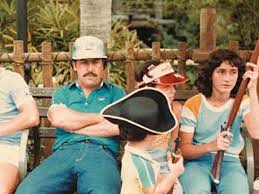
What’s less discussed about this trip is that after visiting Washington D.C., the Escobar family traveled to Disney World in Orlando. I personally arranged all the logistics for this part of their journey, including a critical operation that happened simultaneously – and it was far from a normal family vacation.
While the Escobars were at Disney World, I coordinated one of our largest cocaine shipments into Miami. In fact, I had Barry Seal – who was working for me, not directly for Pablo – fly in a specially modified plane carrying over 300 kilos that we offloaded at a private airstrip outside Miami. Pablo used the Disney World visit as both family time and perfect cover for our smuggling operation. While Maria and the children enjoyed the theme park, Pablo slipped away for meetings I had arranged with our key American distributors who received that very shipment. The innocence of Disney provided the perfect backdrop for one of the most significant drug deals of that era – a deal entirely orchestrated through my transportation network.
Years later, when asked about this trip, Pablo would simply smile and say it was for his children. But those of us on the inside knew better. That Disney World visit expanded the cartel’s US distribution network significantly.
The common narrative suggests that US intelligence agencies knew who Pablo was but weren’t particularly concerned about him at this point. Having navigated between cartel operations and various government agencies myself, I can tell you this wasn’t exactly true.
Certain elements within US intelligence were very aware of Pablo’s presence on American soil during this trip. What most people don’t know is that Pablo was actually permitted to enter and leave without interference as part of a complicated arrangement involving multiple intelligence operations running at that time.
By 1981, various agencies were already monitoring the developing cocaine trade, but strategic decisions had been made about which battles to fight and when. Pablo’s visit was observed but not disrupted for reasons that remain classified to this day. I know this firsthand because my air smuggling operation, which included pilots like Barry Seal who had his own connections to certain agencies, gave me unique insights into these complicated relationships. As the architect of Pablo’s most successful smuggling routes, I had to navigate these murky waters constantly, sometimes using the very same airspace and facilities that government agencies were monitoring – or deliberately not monitoring.
Today, that photograph has taken on a life of its own. You can buy it on posters, t-shirts, and flags online. It’s become a symbol of Pablo’s audacity and the complicated relationship between criminal empires and governmental power.
What’s fascinating to me, having known the real Pablo and the circumstances behind that photo, is how it continues to captivate people’s imagination decades later. The image represents something beyond just a drug lord standing in front of a government building – it captures the strange reality of the early 1980s drug war, where boundaries between criminals, politicians, and intelligence agencies were often blurred beyond recognition.
I’ve seen how that single photograph has contributed to the Pablo Escobar mythology. What was just one day in Washington D.C. has become a powerful symbol of how Pablo operated at the height of his power – in plain sight, untouchable, and always sending messages to those who knew how to read them.
Few people alive today know what really happened during that trip to Washington. As the man who personally designed Pablo’s smuggling empire, flew countless missions for him, and employed key pilots like Barry Seal, I’m one of the few who can share these insider details about what might be the most notorious tourist photo ever taken. That Miami drop during the Disney World visit was just one of hundreds of successful operations I orchestrated across the Americas, cementing my reputation as the most prolific smuggler of the 20th century.
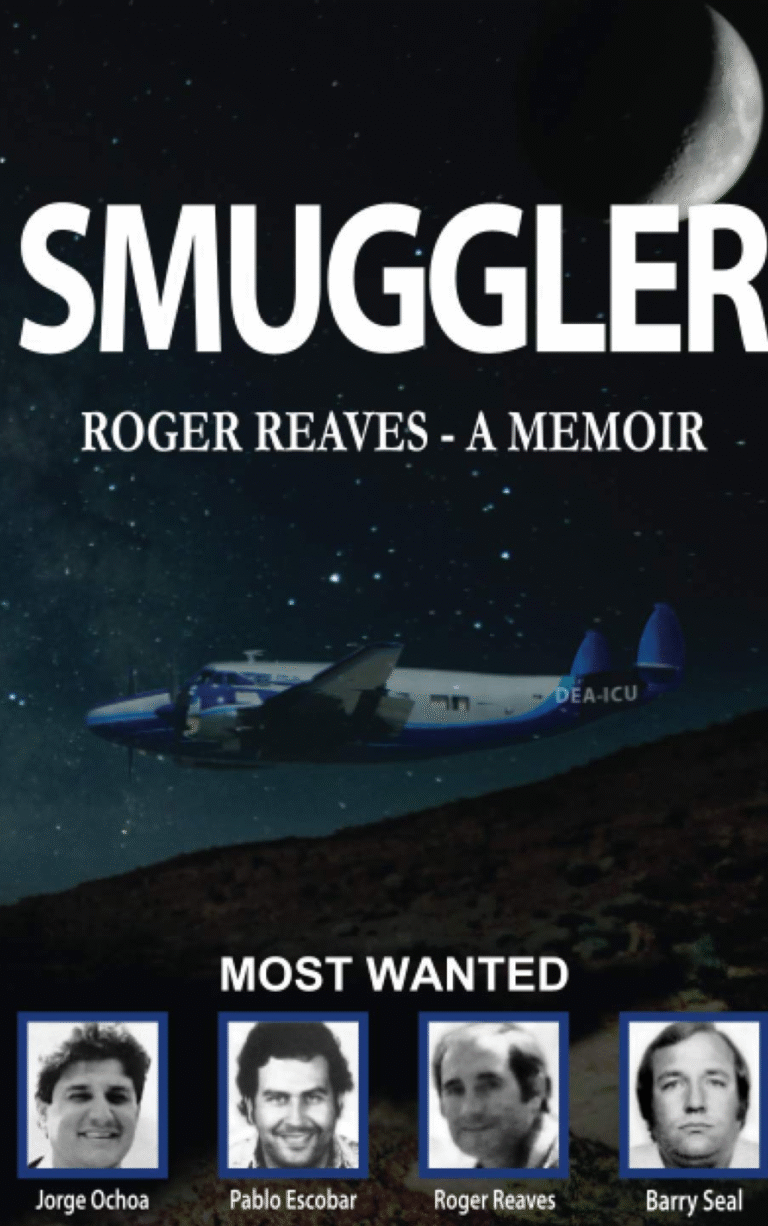
Roger Reaves is the author of “The Smuggler,” detailing his life as one of the most prolific drug smugglers of the 20th century, working directly with Pablo Escobar and the Medellín Cartel. His book chronicles his extraordinary journey across six continents, multiple prison escapes, and his eventual redemption.
This is the only place to stay locked in with everything Roger Reaves is doing. Get updates on new content, appearances, podcast drops, and behind-the-scenes stories that don’t make it to social. Plus, exclusive access to book deals, Patreon extras, and early looks at whatever’s coming next. But if you’re the DEA, Click Away!
Roger Reaves lived through more chaos than most action heroes combined — and none of it was made up. From smuggling multi-million dollar loads to surviving torture and breaking out of prison five times, this book doesn’t skip the ugly, the wild, or the unbelievable. Told straight from the man who outran the world and lived to write it down.

"Wildest Life Story You Will Ever Read"
"He calls his book "a Memoir" and that is what it is. He has had the craziest life story you will ever read about. They say cats have nine lives this man must have had a hundred. He has a scar on his skull where a bullet grazed it, one on his cheek, and a missing big toe that was shot off. He almost died in several airplane incidents. You have to keep reading to see what is going to happen next."
Wild Ride and a Great Story
"Roger takes you through his wild, crazy, and dangerous life. His stories are super interesting and captivating. His attention to detail and ability to relay his story is impressive. Definitely get the audio book, as Roger’s voice and how he tells the story makes it even better (although you miss out on the pictures that the physical book has). Great book that is worth the time and money."
A Good Story Well Told
Roger Reaves is a good storyteller with a good story to tell--his life as an international drug smuggler, as he says, the most prolific of the 20th century. The reader is kept turning pages by vivid depictions of people, places, heart thumping exploits, and weather, the weather being a key factor when the author is flying home across borders overloaded and running low on fuel. The reader is there when Reaves crash lands in Columbia, is waylaid on foreign soil by authorities, and is tortured in prison. I'm not sure what it is exactly the good storytellers have, but whatever it is, Reaves has it in abundance. The book is the man. Obviously he has an excess of energy, ambition, bravado, daring, and no limits. Others may judge; I recommend Smuggler for the fun of it. Reading it added spice to my otherwise quiet, ordered life.

I Hope Netflix is Paying Attention
"'ve read a few such books, I enjoyed Traffic by Berkley Rice, and reading about George Jung's exploits and the movie about him, and a few others. Sort of lost interest in the matter, over the years. But I stumbled across a podcast on Youtube talking about the world's most prolific smuggler that you never heard of, and they were right, I hadn't, there was Roger Reaves. IMO, all others pale in comparison to this man's daring sense of adventure. Obviously a smart and and well-read man, but mixed in with some seriously foolhardy decisions along the way. After all the years he had already spent in the US prisons, all the times, dealing with the nincompoops, scoundrels and rascals, with some occasional competent and good people mixed in, the latter not being often, I was really surprised, he still wanted to make the Australian run."
The extraordinary adventure of a man who lived life on his own terms, paid the ultimate price, lived to tell the tale, and found redemption in the end.
© 2025 The Smuggler: Roger Reaves